
I finished 6 books this month, all of which fit more or less into my month’s theme of favourite writers, four by women/POC, and two in German. Portuguese might restart in March.
- The Silver Thorn — Hugh Walpole
- Bannmeilen — Anne Weber
- The Sad Part Was — Prabda Yoon, tr. Mui Poopoksakul
- Backwater — Dorothy M. Richardson
- Elizabeth Finch — Julian Barnes
- Die Geschichte des verlorenen Kindes — Elena Ferrante, tr. Karin Krieger
The choice of theme was mainly because I’d already committed to two of my favourites (Richardson for a book group, and Barnes because I accidentally read one of his last month and felt like continuing); also because I’d almost finished the Walpole. This was the first of his books I’ve read, mainly because I’d never heard of him before, but he’s fantastic (at least in these stories). They’re mostly of a similar type: wryly comic about middle-class Brits of the interwar period, with an irony that makes the navel-gazing go down easier.
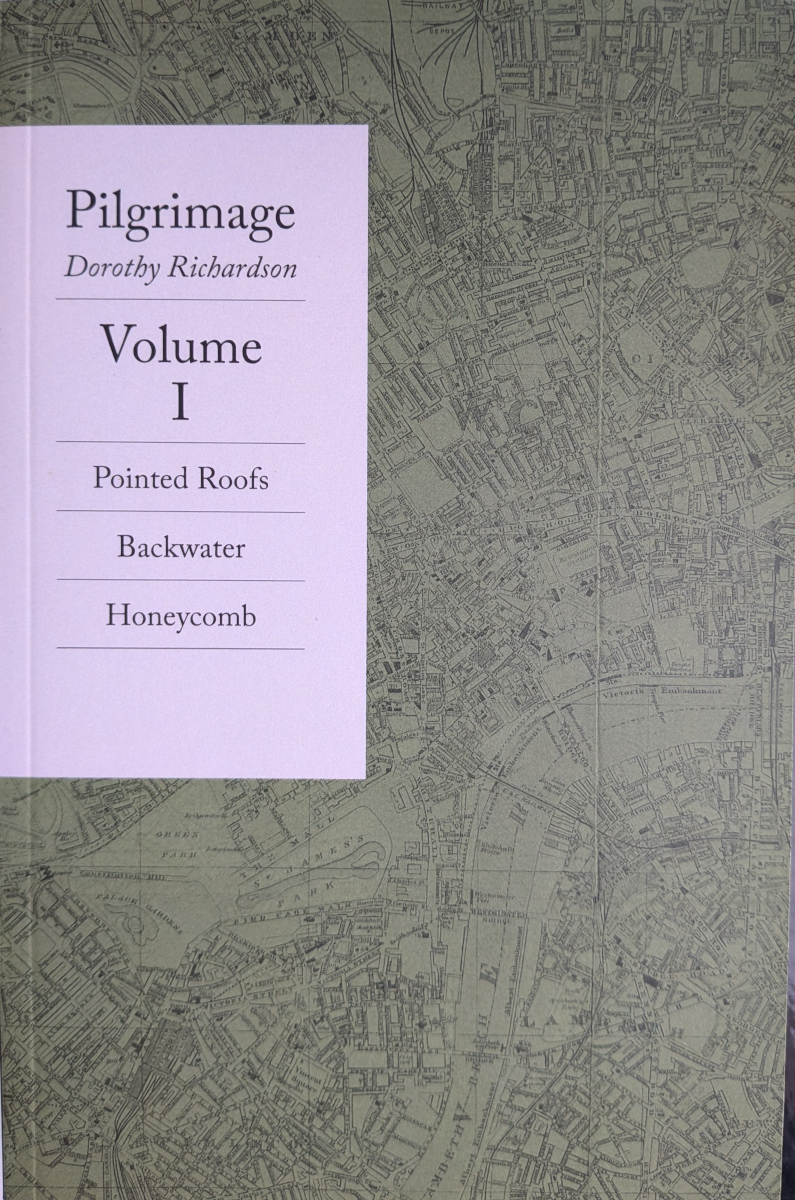
Backwater is the second volume of Pilgrimage, and sees Miriam stuck in a north London which she, in her snobbish middle-class way, looks down on. The frankness with which Richardson portrays her often ridiculous 18-year-old alter ego is one of the great things about the book which I didn’t properly pick up on the first time. It’s full of extraordinary moments, possibly the best of which being:
Miss Meldrum and Miss Stringer, the two bald Scotch chemists who went out every evening to look for a comet, the pale frowning girl from Plaistow with her mad-eyed cousin whose grey curls bunched in a cherry-coloured velvet band seemed to say “death—death” to Miriam more dreadfully out here amongst the greenery than when she suddenly caught sight of them at table, sat disconnectedly in chairs behind the squatters on the grass.
The bald Scotch chemists not even being the most extraordinary description in the sentence is what really makes it.
To the Barnes: Elizabeth Finch is not his best book: as the reviews I read noted, Elizabeth Finch herself doesn’t come across as the intellectual colossus the narrator thinks she is. That of course may be part of the point: he’s a typically Barnesian slightly bumbling protagonist, which allows writer and reader to maintain an enjoyable (ironic, British) distance. We’re left to consider for ourselves the significance of Julian Barnes focusing on Julian the Apostate, and the unreliability of sources and memories are given typical airings.
The other definite favourite writer was Anne Weber: Bannmeilen is labelled a “novel”, but it’s not clear how much if any of it is invented. It describes a series of walks undertaken in the banlieues north of Paris by Weber and her half-Algerian friend Thierry. The two spend much of their time in — ironic — bickering which neither she nor the reader know how seriously to take. Nothing much happens, but the depictions of the places are fascinating, from the run-down tower blocks to the hostile liminal spaces which surround them.
The other two books this month were if not quite top tier favourites, at least known quantities. The Sad Part Was is a collection of playful, postmodern stories which were always rewarding, but always something new. Special note for this brilliant bit of translation by Mui Poopoksakul:
my heart would beat like the engine of a train as it pulls into the platform, slow but deliberate, rhythmic but purposeful.
Finally, Die Geschichte des verlorenen Kindes is the last of Elena Ferrante’s Neapolitan Quartet. I’ve enjoyed them, but four is possibly more than enough. There are interesting parallels with Elizabeth Finch: both are portraits of an admired friend, with the inadequacies of the writer-narrator very much on display. This volume suffered from the first section being largely about Lenù’s marital troubles, both being less interesting in itself, and making the later return of the various Neapolitan characters confusing for someone who read the third volume some time ago. The audiobook narration was very good, however, and I’ll miss the way Eva Mattes says “Lenù”, “Ja”, and “Nein”.
I started a reread of one other favourite author — Samanta Schweblin, Little Eyes — and am starting another reread of a not particularly favourite book by another favourite author (Indoctrinaire — Christopher Priest), which will both fit nicely into next month’s intersecting themes: 1983 Granta BYBN listees and South America. Again because I’m already planning to read Macunaíma (South America) and another Barnes (BYBN). I may spend the rest of the year choosing another nine somewhat Barnes-related topics, just for fun.