I finished nine books this month, four for my extended SFF/POC theme, eight by women or POC, a modest two in German, and one in Portuguese.
- The Rosewater Insurrection — Tade Thompson
- O último ancestral — Ale Santos
- The Seekers — Gautamiputra Kamble, tr. Sirus J. Libeiro
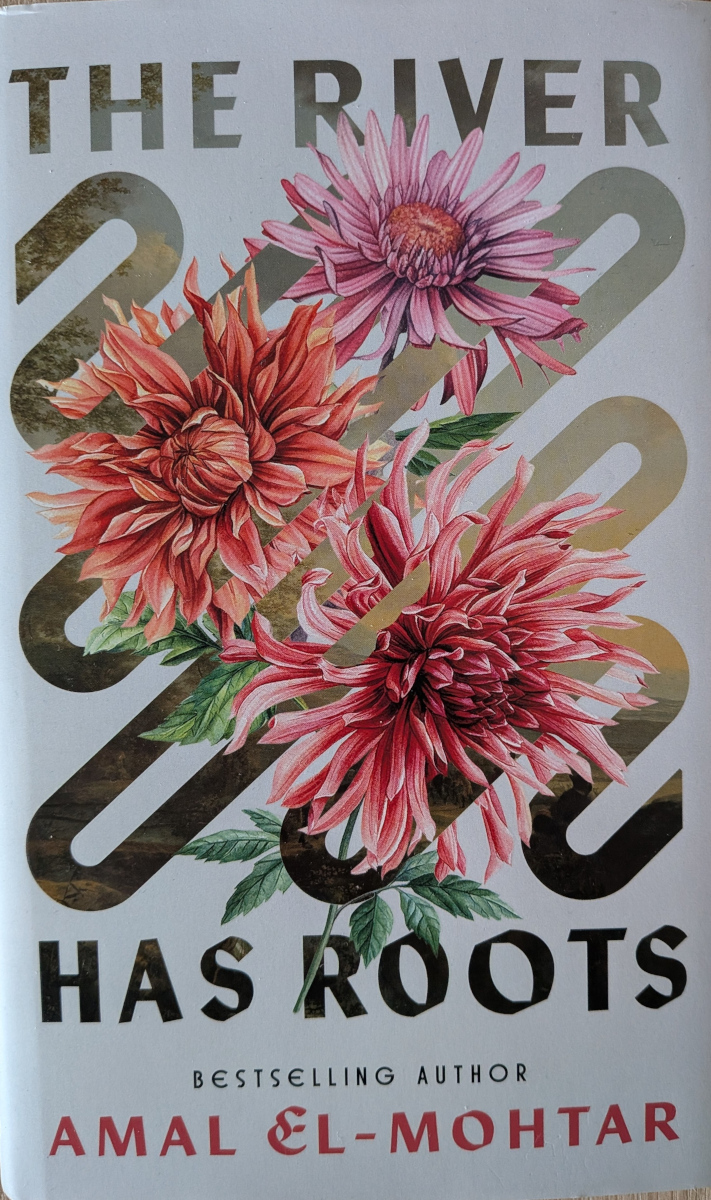
- The River Has Roots — Amal El-Mohtar
- The Collected Stories — Grace Paley
- Im Herzen der Katze — Jina Khayyer
- Die Holländerinnen — Dorothee Elmiger
- The Wind Whistling in the Cranes — Lidia Jorge, tr. Margaret Jull Costa and Annie McDermott
- Bleak House — Charles Dickens
The Rosewater Insurrection is the second in a trilogy, and I read the first so long ago that my memory was extremely hazy, but the story was distinct enough that it wasn’t a problem. Things got very strange very quickly, the individual oddities nicely complementing the gradually emerging backstory. My only real quibble is that as in the first book (one thing I do remember) the sexual politics was sometimes questionable; I likstened to the audiobook, which had well-distinguished, if sometimes exaggerated voices and accents.
The Seekers is a short, and very distinctive collection of stories in the Ambedkarite tradition, so Buddhist and anti-caste elements are prominent. Again slightly suspect gender politics (the stories generally feature a rather submissive woman following and learning from a man), but very much redeemed by the fairytale atmosphere (as the helpful introduction points out, influenced by Buddhist jataka stories).
Fairytale is also the dominant mode in The River Has Roots, a novella (with attached short story which I think is even better). Much more politically sound, with gender-fluid fairies, there’s a satisfying story in few pages, along with some lovely details in the writing.
The last of the SFF/POC books is O último ancestral, which combines SF and fantasy elements in a way that reminded me of C. T. Rwizi. This isn’t quite as good (there’s a lot of pseudo-spiritual verbiage, and irritating tropes such as battle scenes where the antagonists intersperse their blows with declamatory conversation), and I won’t be reading the rest of the series. There was just enough to keep me reading to the end, at least.
My two German books were both Deutscher Buchpreis nominees this year. I had to buy Im Herzen der Katze because of the title, but predictably actual cats were thin on the ground. It’s essential a fictional travelogue, with no real plot beyond what is necessary to convey the life of women in Iran, which it does do rather well. There’s an odd conjunction of infodumps (such as where the characters have a conversation about the literal meaning of Iranian month-names, and one feels compelled to run through all twelve), and some very effective characterisation (especially the opening video call between the narrator and her mother).
Die Holländerinnen, winner of the prize this year, would have been better read in text than as an audiobook: it takes the form of a lecture in which the the speaker narrates a South American adventure, while going off on a maze of tangential sub-stories, all tending to a general theme of alienation — all very Herzogian. Now I have some idea of what it’s about, I definitely need to relisten, and the speaker does do a good job of highlighting the structure whenever the framing story resurfaces.
Grace Paley’s The Collected Stories was a reread — I think my third time through the whole volume. Some stories I’d forgotten completely, but the texture of the writing is unmistakable. It’s a wonderful (and wonderfully odd) world to immerse myself in every few years.
The last two books were group reads of a sort. The Wind Whistling in the Cranes was the last Portuguese in Translation group book for the year; I messed up my timing completely, starting well in advance but far too slowly, and at first I found it hard to get into it. I did pick up the pace later, if not in time to finish before the discussion, and as I began to understand the central character of Milene, it all started to make more sense. I’m not sure it had to be quite so long, but it’s a very powerful read.
Lastly, Bleak House (by my token white male) was an interesting new experience for me: the pace was kept up with daily comments from Yiyun Li about the day’s chapter(s), and discussion was (without the opportunity to go really in-depth) on Substack. I think I’d read it before — I certainly started it — but much of it was a complete surprise to me. Yet more dodgy sexual politics (an accidental theme this month), and the characters are not quite the best of Dickens, but it’s full of splendid bits along the way.
The December plan is for non-fiction, mainly because I want to read Dorothy Richardson’s letters in preparation for the next Pilgrimage read-through next year….